

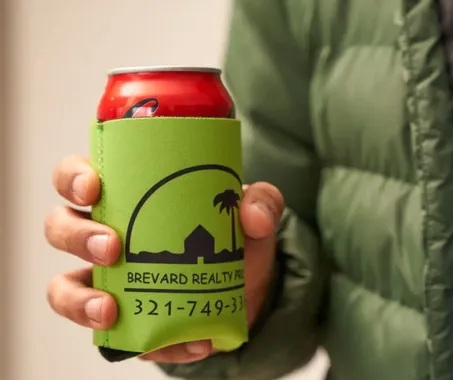
You ask three suppliers for a quote on 500 drink sleeves and get back three different words: koozie, can cooler, can sleeve. Then one quote is twice the price of another, and nothing on the page explains why. So what's the real story with koozie vs can cooler?
Here's the short version: in the koozie vs can cooler debate, both words describe the same product, an insulating sleeve that keeps a canned drink cold in your hand. "Koozie" is a brand name that became an everyday shorthand. The difference that actually changes how your order performs is the material: foam or neoprene.
Those two materials look nearly identical in a product photo. They don't behave the same way on a 90-degree afternoon, in a washing machine, or on a spreadsheet. That matters more than the label on the invoice when you're ordering custom koozies bulk for a few hundred guests.
Below, we'll sort out the naming (including the trademark history), break down foam and neoprene side by side, and map each one to the events it suits best. You'll also get the practical ordering details: sizes, artwork files, proofs and production timelines.
Quick Overview: Same Product, Two Different Materials
Our own definition is a good starting point: custom can coolers, known as koozies, are insulating sleeves designed to keep canned drinks cool for extended periods, typically made of neoprene or foam with a collapsible design that stores and ships flat. "Can sleeve" is the same idea, though it's often used for the flatter, slap-wrap style rather than a structured cooler with a base.
Foam is the budget-friendly classic: it holds its shape and keeps the cost per piece low, which makes it the practical pick for large giveaways. Neoprene is the wetsuit material: stretchy, washable, generally better at holding temperature, and better suited to repeat use. Here's how the two compare across our own foam and neoprene lineup.
| Criterion | Foam can cooler | Neoprene can cooler |
| Material and build | Standard foam in collapsible, flat-fold styles, plus the rigid Tough Solid Foam style | Premium neoprene with a flexible stretch fit; a PU-coated version adds a smooth polyurethane outer coating |
| Insulation (hold time) | Helps hold drink temperature for 30–60 minutes, depending on conditions | Generally better insulation than foam |
| Condensation control | Absorbs condensation to keep hands dry | Absorbs condensation; the PU-coated style adds a water- and stain-resistant, wipeable surface |
| Durability and reuse | Reusable; rigid and holds its shape well | Washable and holds up better to repeat use |
| Printing | One-color and full-color logo options | One-color, full-color, screen-printed or heat transfer decal options; PU-coated styles use sublimation |
| Relative cost per unit | Budget-friendly; the practical pick when cost per unit matters most | Usually higher per unit, especially PU-coated styles, with a more premium feel |
| Best for | Large giveaways, festivals and fundraisers where cost per piece matters most | Corporate gifts, weddings and anything meant to be kept and reused |
Why "Koozie" Isn't Really a Generic Word
If you're writing a purchase order, the naming question has a real answer. The name “Koozie” was coined by Bob Autrey of San Antonio, Texas, and the rights were later sold to Radio Cap Corporation, which registered the KOOZIE trademark in 1980 and launched the product as a can cooler in 1982. Norwood Promotional Products acquired Radio Cap in 1991, and BIC Graphic purchased Norwood and its sub-brands in 2009.
Norwood has asserted that terms like beer hugger, can cooler and huggie do not infringe its trademark, while koozie, coozie, coolie and cozy do. That's why most suppliers, including us, sell the category as "can coolers" and reserve the capital-K Koozie® name for genuine licensed styles.
Key Insight: "Koozie" is a registered brand, not a generic product type. Search for it however you like, but expect quotes and catalogs to say "can cooler" or "can sleeve" for anything that isn't an official Koozie® product.
Foam Can Coolers: The High-Volume Workhorse
Foam is the version most people picture. It weighs almost nothing, folds flat into a pocket or a swag bag, and costs less per piece than nearly anything else you can print a logo on. For a festival booth or a 5K finish line, that combination is hard to beat.
Our catalog includes several foam styles, including Tough Solid Foam Can Coolers and the licensed Koozie® The Original. That original style is one of the most recognizable personalized Koozie can coolers around: a PVC plastic exterior with a nitrile foam interior, standing 4 inches tall with a 3.25-inch diameter and 0.375-inch walls, in 12 stock colors matched as closely as possible using PMS codes.
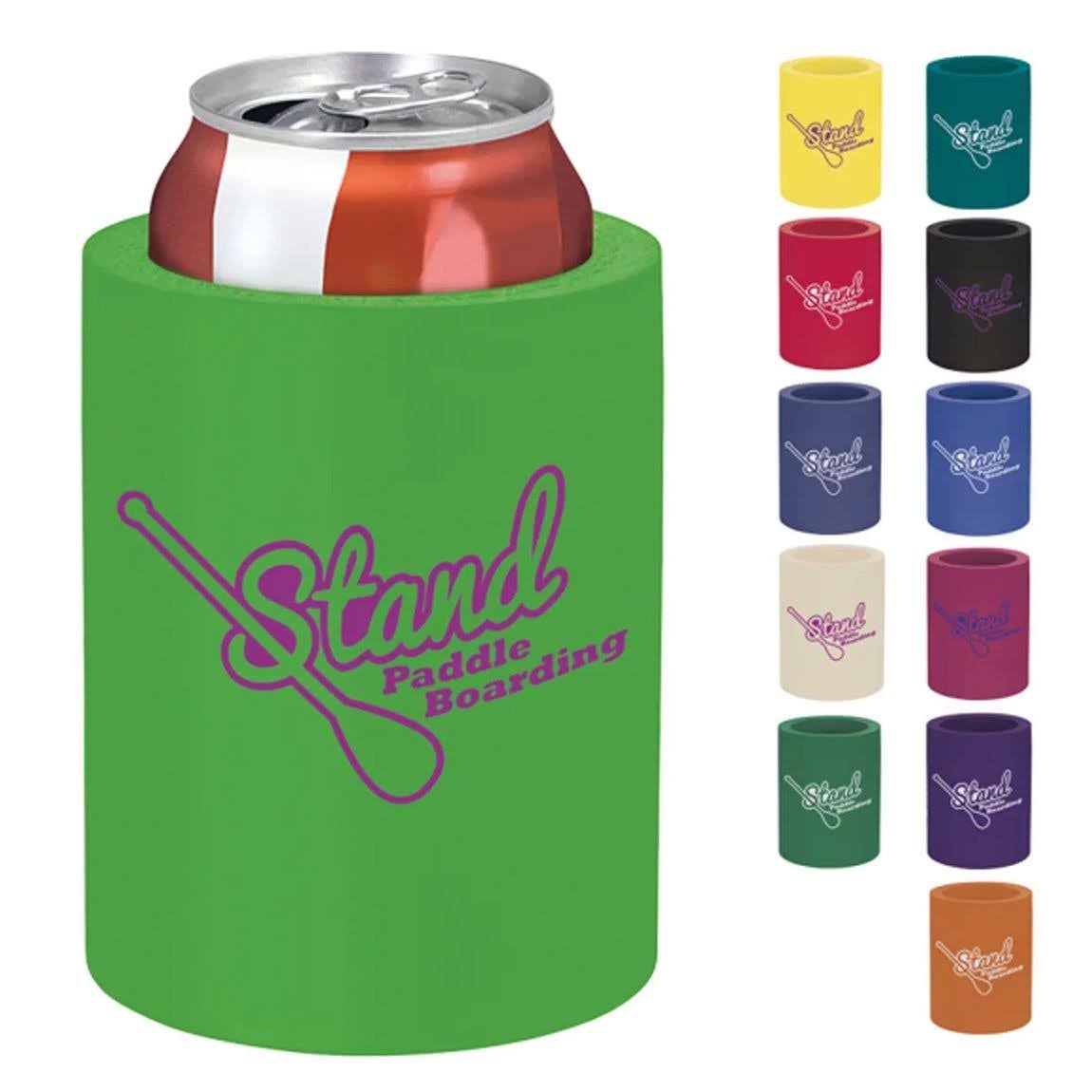
Koozie® The Original Can Coolers
- • PVC plastic exterior with a nitrile foam interior
- • 4" tall, 3.25" diameter, 0.375" thick
- • 12 stock colors, matched using PMS codes
- • Free proof before you buy; nothing prints without your approval
Foam's tradeoffs are predictable. It absorbs condensation, so it can feel damp by the end of a long afternoon, and it doesn't hold up to repeat use as well as neoprene. That makes foam the right call for a single event or a giveaway that sees a handful of uses, not a keepsake meant to last for seasons.
Neoprene Can Coolers: The Keepsake Option
Neoprene is polychloroprene, a family of synthetic rubbers. In foamed form it's the material used for wetsuits and fishing waders, and it resists degradation better than natural or synthetic rubber, which is why the same stuff shows up in gaskets and hoses. The insulation comes from gas bubbles sealed inside the rubber, which slow heat transfer and keep water out instead of soaking it in.
That structure changes how the product feels in hand. Neoprene Koozies and can coolers have heft, holds their shape, stretch to fit bottled beverages as well as cans, and read like a real gift rather than a handout.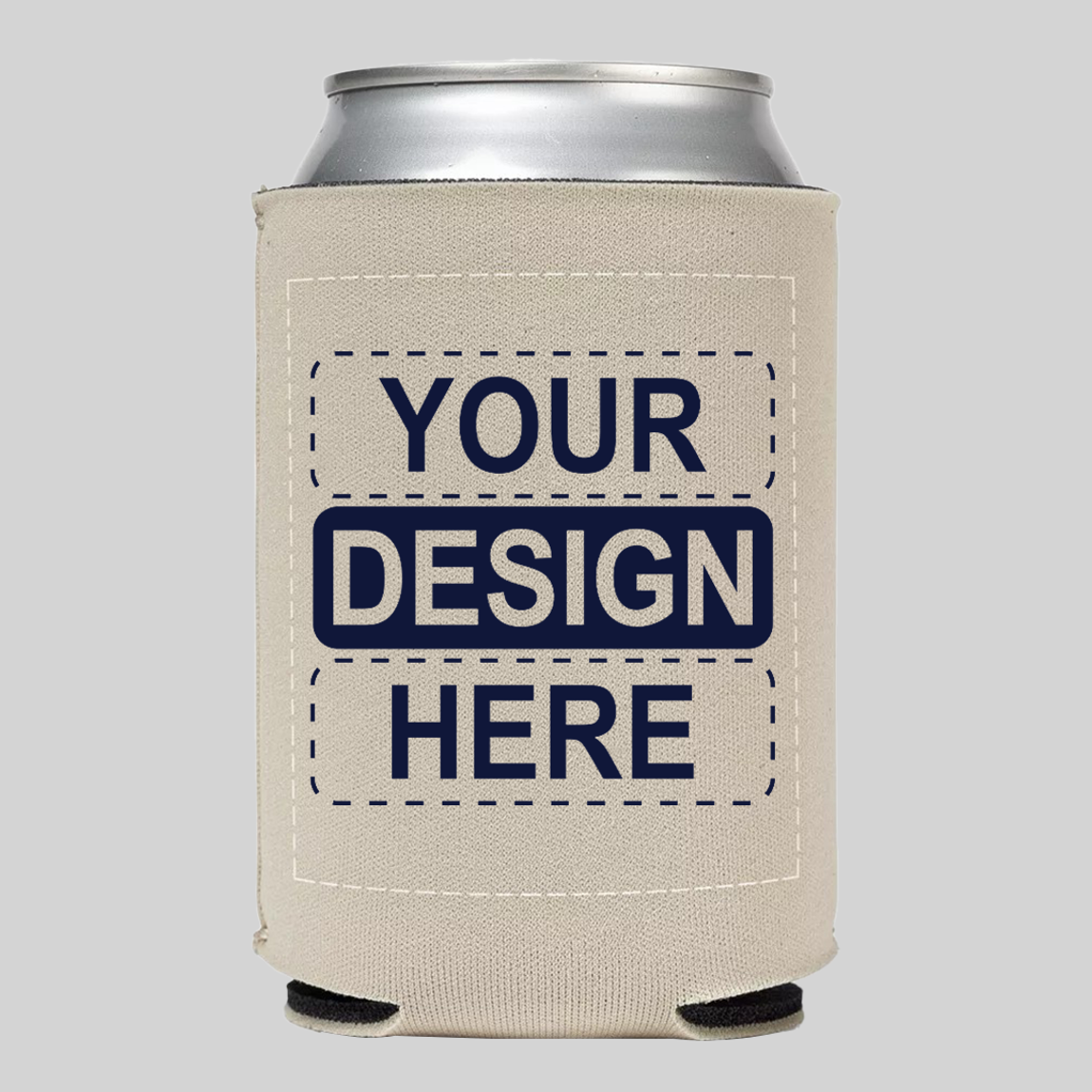
Insulation: How Long Does Either One Keep Beverages Cold?
Realistically, a can cooler buys you time rather than refrigeration. Our guidance is that can coolers help maintain your drink's temperature for 30 to 60 minutes, depending on the external environment, and that neoprene generally offers better insulation than foam.
That range is wide for a reason: a can in direct summer sun warms much faster than one in a shaded tent. Plan around the range rather than treating it as a guarantee.
Key Insight: If the event involves standing in direct sun with a drink for an hour or more, neoprene is the material that actually solves the problem. For a 20-minute toast or a quick trade show pour, foam is plenty.
Condensation, Durability and Reuse
Sweaty cans are half the reason people reach for a cooler in the first place. Foam absorbs that moisture, which is why a well-used foam sleeve can feel clammy. Neoprene's closed cells repel water, and the laminated fabric layer soaks up condensation before it reaches your hand or the table.
Durability follows the same pattern. Both materials are reusable, and all of our custom can coolers are made from safe, non-toxic, food-grade materials. Foam is rigid and holds its shape well, which suits a giveaway that sees a handful of uses. Neoprene is stretchy and washable and holds up better to repeat use, so it's the one to choose when you expect guests to keep it.
Cost per Unit and Order Quantity
Foam is the budget-friendly choice, which is exactly why it's the default for handing out by the hundreds. Neoprene usually costs more per piece, and PU-coated neoprene costs more still.
The better way to think about it is budget math, not budget opinion. Foam puts more coolers in more hands; neoprene puts a better cooler in fewer. A nonprofit handing out 1,000 pieces at a road race stretches further with foam, while a couple ordering 150 wedding favors gets a keepsake with neoprene.
Minimums depend on the style you pick. Some of our can cooler styles are flexible on quantity, while licensed products such as Koozie® The Original carry a stated minimum on the order form, so check the product page before you build your budget. Pricing is quantity-tiered, and the bulk price chart on each page updates as you enter quantities.
Important: Minimum order quantities differ from style to style. Confirm the minimum on the specific product page (or with our team) before you lock in a per-guest count.
Sizes and Fit: Cans, Slim Cans, Bottles and More
Standard can coolers are built for 12 oz cans, and that covers most events. We also offer sizes for slim cans, bottles and larger formats like 16 oz cans, plus related styles such as coffee cup sleeves and zippered bottle coolers. Some styles are designed to fit cans, bottles and even wine glasses.
- • 12 oz standard cans: the default fit across both foam and neoprene styles
- • Slim and seltzer cans: choose a slim style; a standard sleeve will sag on a tall can
- • 16 oz cans and bottles: pick a 16 oz size for tallboys or a Zippered Bottle Cooler for longnecks; neoprene's stretch fit gives a snugger hold
- • Hot drinks: coffee cup sleeves cover the same branding need at an indoor or cold-weather event
Printing and Artwork: What Each Material Can Handle
Print processes for can coolers include screen printing, digital printing and sublimation, and we offer full-color printing with vibrant logos, graphics and photographic designs. Both materials offer one-color and full-color logo options, so the right choice depends more on your artwork than the material: a simple one-color logo keeps costs down, while full color handles detailed graphics and photos.
Imprint areas are small either way, so a simplified logo lockup almost always beats a shrunken version of your full brand mark. Each product page has a downloadable artwork template showing the print area for that style.
For artwork, send vector files (AI, EPS or PDF) for the cleanest result. High-resolution PNG or JPG files at 300 DPI or above also work. We support multiple designs in a single order, subject to minimum quantity requirements per design.
Pro Tip: Ask for a proof before production, and check the trademark symbol, PMS colors and how much of the design falls near the seam. Nothing prints without your approval, and revisions are as simple as replying to the proof email.
Ordering Logistics: Timelines, Proofs and Samples
Production for custom can coolers typically takes 1 to 3 weeks. Standard shipping runs 3 to 7 days, expedited shipping can arrive in 1 to 3 days, and expedited production is typically available in 3 to 5 business days.
Two details worth planning around: artwork approval drives the schedule, so if you don't approve proofs by 4 PM, the delivery date may shift. And sales tax applies only to orders shipped within Texas, where 8.25% is added; tax-exempt buyers can enter an exemption number at checkout.
Which Should You Order? Match the Material to the Occasion
The right choice depends on event context more than budget alone. A neoprene favor sits in a guest's kitchen drawer for years; a foam one handed out at a gate may not make it to the parking lot. Both outcomes can be the correct use of your money.
| Occasion | Better fit | Why |
| Wedding or milestone party | Neoprene | Guests keep it; names and dates stay legible for years |
| Festival, tailgate or large giveaway | Foam | Lowest cost per piece at high volume, ships and stores flat |
| Trade show or conference | Either | Foam for booth traffic, neoprene for qualified leads and VIPs |
| 5K or nonprofit fundraiser | Foam | Budget stretches across hundreds of participants |
| Client or employee gift | Neoprene | Weight and structure read as a real gift |
Is a Branded Can Cooler Worth the Promo Spend?
Drinkware earns its shelf space in the promotional world. ASI's 2026 Ad Impressions Study ranks drinkware as the second-largest promotional category in the U.S. at 10.4% of annual industry sales, or $2.8 billion, behind only T-shirts.
Usefulness is the reason it works. ASI found that 87% of end-users would keep a branded drinkware item because it's useful, more than three-quarters would use it at least weekly and keep it at least a year, and the average drinkware piece generates roughly 1,300 lifetime brand impressions. Separately, ASI reports that nearly 80% of U.S. consumers who receive a promotional item have a more favorable impression of the advertiser.
Read those numbers with the material question in mind. Impressions accumulate over the life of the item, which is the strongest argument for spending more per piece on neoprene when your audience is small and worth keeping close.
The Verdict: Order Custom Koozies and Can Coolers From CustomLanyard.net
Foam deserves its reputation. It's the cheapest way to get a logo into a crowd's hands, it ships flat, and for a one-afternoon event it does the job. Neoprene costs more per piece and earns it back in hold time, condensation control, print quality and years of reuse. Neither is the "right" answer until you know your guest count and your setting.
We stock both sides of the comparison, so you don't have to pick a supplier based on which material they happen to carry.
- • A catalog of 40+ can cooler styles: foam, neoprene, PU-coated neoprene, can sleeves, slim, 16 oz, bottle and coffee sleeves
- • Licensed Koozie® styles alongside our own premium lines
- • Full-color printing, screen printing and sublimation, with free proofs and samples available
- • Standard production of 1–3 weeks, with expedited and 24-hour rush options
- • 24/7 support and a 100% refund if a transit delay means your event has passed
Pick your material, upload your logo and request a free proof: browse the full range of custom can coolers and enter your quantity to see live bulk pricing and delivery dates, or call 1-844-877-8930 and we'll help you choose between foam and neoprene for your event.
Frequently Asked Questions
Is a koozie the same thing as a can cooler?
Functionally, yes. Both describe an insulating sleeve that slips over a can to keep the drink cold and your hand dry. Koozie® is a registered trademark, so suppliers use "can cooler" or "can sleeve" as the generic category name and reserve the brand name for licensed products.
Does neoprene actually keep a drink colder than foam?
Generally, yes. A can cooler helps hold a drink's temperature for 30 to 60 minutes, depending on conditions, and neoprene generally offers superior insulation compared to foam. That comes down to its structure: gas bubbles sealed inside the rubber slow heat transfer.
Will a can cooler fit a 16 oz or slim seltzer can?
There's a style for each. Standard sleeves fit 12 oz cans, slim styles fit tall and hard seltzer cans, and we offer 16 oz and bottle options too. For longnecks, our Zippered Bottle Coolers are built specifically for bottles, and neoprene styles add a snug stretch fit.
Can I print a full-color photo or a multi-color logo?
Yes. We offer full-color printing on custom can coolers, including detailed logos and graphics, using screen, digital or sublimation printing depending on the style and artwork. Send vector files (AI, EPS, PDF) when you can, or 300 DPI-plus PNG or JPG files.
Are custom can coolers reusable and food-safe?
They're designed to be reused, and all of our can coolers are made from safe, non-toxic, food-grade materials. Neoprene is washable and holds up best to repeat use, while foam is the budget-friendly choice for lighter duty.
How quickly can I get them for an event?
Standard production runs 1 to 3 weeks, with standard shipping of 3 to 7 days. If you're tight on time, expedited production is typically 3 to 5 business days, expedited shipping can arrive in 1 to 3 days, and we carry a 24-hour rush can cooler style. Approving your proof promptly is the single biggest factor in hitting your date.