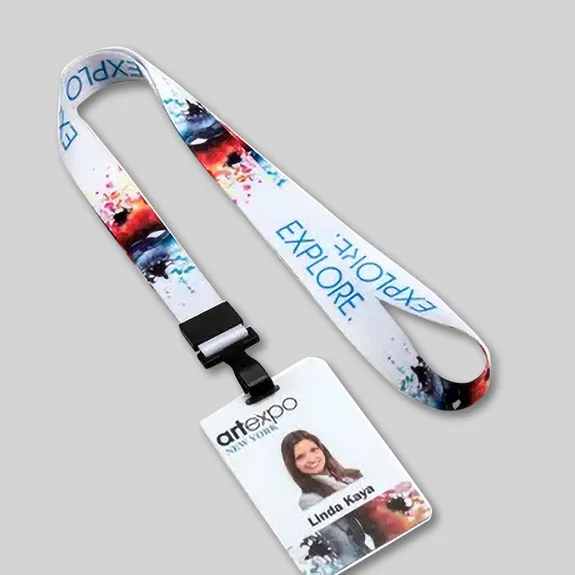

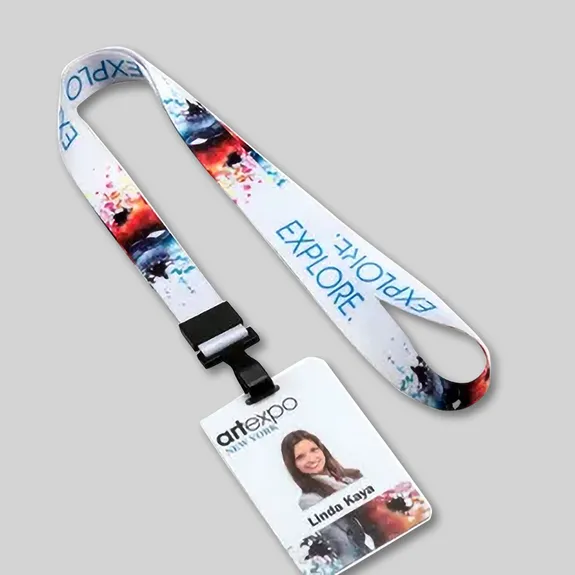
/filters:quality(80)/fit-in/630x380/blog/image-1792083158.jpg "Custom sublimation lanyards and screen-printed lanyards displayed side by side for comparison.")
Screen printing as a modern commercial technique took shape in the early 1910s, evolving from stenciling methods that are much older still. Dye sublimation came along later, as a digital-era printing process. Despite the gap between them, both printing methods are still fighting for space on the same lanyard today. So which one actually deserves it?
If you've ever tried to choose between sublimation and screen printing for a batch of custom lanyards, you already know the decision isn't as simple as picking whichever sounds more modern. Each printing method has a different printing process, a different cost curve, and a different look up close. This guide breaks down exactly how sublimation and screen printing work, where each one wins, and how to pick the right printing technique for your next order, whether you want vibrant colors across a run of lanyards for five people or fifty thousand.
Quick Overview: Sublimation vs. Screen Printing at a Glance
Here is how the two methods score (out of 5) on the criteria covered in this guide:
| Criteria | Sublimation | Screen Printing |
| Full-color, gradient, and photo detail | 5/5 | 2/5 |
| Bold one- or two-color logos | 4/5 | 5/5 |
| Durability | 5/5 | 4/5 |
| Soft feel, no raised texture | 5/5 | 3/5 |
| Cost per unit, 10–100 pieces | 4/5 | 5/5 |
| Cost per unit, 1,000+ pieces | 5/5 | 4/5 |
| Ease of reordering | 5/5 | 4/5 |
Sublimation vs. Screen Printing: What's Actually Different?
At the most basic level, sublimation and screen printing put color onto a lanyard in two completely different ways.
Screen printing is a physical, ink-based printing technique. A mesh screen holds a stencil — a separate stencil for each color in the design — and ink is pushed through the open areas of that screen directly onto the material.
Sublimation printing is a digital printing process. A design is printed onto special transfer paper using sublimation ink, then a heat press turns that ink into a gas that bonds permanently with polyester fabrics at the fiber level.
Across the wider promotional products industry, there are actually three decoration methods brands commonly weigh against each other: screen printing, sublimation, and embroidery. For lanyards specifically, the real decision almost always comes down to the first two, since embroidery suits woven straps and stitched text rather than full-color printed graphics.
Neither is the wrong method, but they're built for different jobs. Screen printing excels at simple, bold designs in a small number of colors. Sublimation excels at full-color, photo-quality designs with unlimited colors and fine details.
Key Insight: Screen printing puts ink on top of the lanyard, while sublimation dyes the design into the polyester itself. Almost every other difference between the two (feel, color range, durability, and cost) comes from that one distinction.
What Is Screen Printing, and How Does the Screen Printing Process Work?
Traditional screen printing has barely changed in over a century, and that's part of its appeal; it's a proven, repeatable printing technique with predictable results.
How the Screen Printing Process Works, Step by Step
Screen printing uses a mesh to transfer ink onto a surface while blocking some areas with a blocking stencil to create the design. A squeegee pulls ink across the screen one color at a time; a separate screen is required for each additional color in the design.
In practice, that means:
- A design is separated by color, and a stencil is created for each one.
- Each stencil is applied to its own mesh screen.
- Ink (typically plastisol or water-based, though specialty inks like glow-in-the-dark or metallic formulas are also available) is pushed through the mesh with a squeegee, one color and one screen printing pass at a time.
- The lanyard is cured, usually with heat, to set the ink permanently.
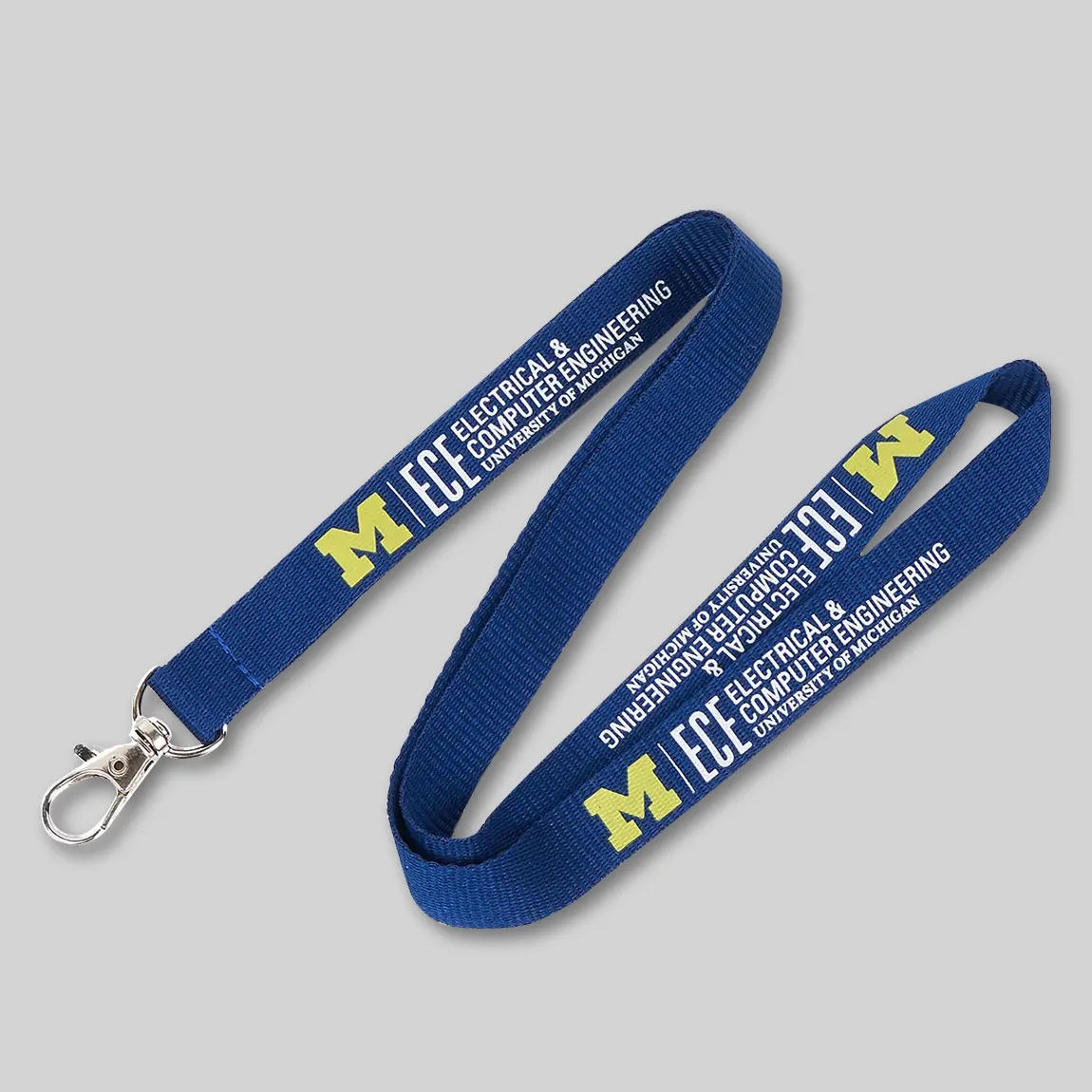
Because plastisol inks sit on top of the material rather than soaking into it, they create excellent opacity, which is exactly why screen printing produces such bold, high-opacity logos on any lanyard color. That same raised layer of ink is also how screen printing can create interesting textures: a slightly raised, tactile print that reads as more dimensional than a flat sublimated design, which some brands prefer for a premium, hand-touched feel.
What Is Dye Sublimation, and Why Does It Look So Different?
Dye sublimation flips the traditional screen printing process on its head. Unlike screen printing, which lays ink on top of the material, sublimation ink adheres to and becomes part of the material itself.
How the Dye Sublimation Process Works
Sublimation starts the same way most modern jobs do: with a digital file. Sublimation printing is a digital printing style that uses heat and pressure to turn dye into a gas, then bonds it with specific polyester fibers. Sublimation only works on some materials and not others: the surface has to be built to accept a gas-phase dye.
Sublimation is one of several dye transfer techniques used in textile decoration today, and it remains the most common choice for lanyards because of how cleanly it bonds to polyester.
Here's the printing process in short: a design is printed onto transfer paper using sublimation ink, then a heat press applies heat and pressure. That heat turns the ink into a gas, which permeates the synthetic fabric fibers and bonds at a molecular level. Once it cools, the dye adheres permanently; it doesn't sit on the surface, so there's no texture, no cracking, and no peeling after repeated washing.
This is also why sublimation is the go-to printing method for all-over prints. Because the dye becomes part of the fabric rather than a layer on top of it, sublimation can wrap full-color designs edge to edge without any of the stiffness screen printing adds when ink builds up across a large area. Even leftover fabric scraps trimmed from a sublimated lanyard show the same printed pattern straight through, since the dye runs all the way into the fibers rather than sitting as a separate layer.
Full Color, Fine Detail: Comparing Print Quality Between the Two
Print quality is where the two methods genuinely part ways.
Sublimation handles gradients, digital photos, and intricate designs with ease, since it isn't limited by how many screens a design would otherwise require. It delivers fantastic print quality on colorful, complex artwork that a handful of screens simply couldn't reproduce. There's no cap on colors, and fine details that would blur or clog a mesh screen come out crisp every time.
Screen printing, on the other hand, produces bold, high-opacity color that can look punchier on solid shapes and simple logos, especially in one or two colors. But detailed printing with gradients or photographic elements gets expensive fast, since each additional color means a separate screen, more setup time, and more room for registration errors between colors.
Neither one is a clear winner for every design. A single-color logo prints beautifully and cost-effectively on a screen. A colorful, multi-tone brand mark with fine details belongs on a sublimation printer.
Key Insight: If your design has gradients, detailed designs or photos, or more than three colors, sublimation is the safer choice. For a bold one- or two-color logo, screen printing gives you an equally sharp result.
When Should You Choose Screen Printing Over Sublimation?
Choose screen printing when:
- Your design uses one to three solid colors
- You're ordering somewhere in the roughly 10-to-100-unit range, where polyester (screen-printed) pricing is lowest per unit
- Bold, high-opacity color matters more than fine gradients or photo-level detail
In that 10-to-100-unit range, choosing screen printing isn't sacrificing quality for cost; it's matching the method to the design, since a bold one- or two-color logo looks just as sharp on a screen as it would sublimated.
Dark Fabrics and Dark-Colored Lanyards: Both Methods Work
Dark fabrics and dark lanyard colors aren't limited to one printing method. Since the entire lanyard surface is part of the printed design, the background color prints right along with the logo rather than depending on separate pre-dyed sublimation blanks. Screen printing's plastisol inks also sit on top of the fabric with enough opacity to print cleanly on any base color, including black or navy. The real difference between the two on a dark lanyard comes down to look and budget rather than whether dark is possible at all: screen printing gives a flat, high-opacity logo, while sublimation blends color and background into one continuous print.
Sublimation for Lanyards: Where It Shines
Of the two main printing methods used on lanyards, sublimation is the one built for full-color, edge-to-edge artwork. Sublimation is the better printing technique when:
- Your design uses full-color artwork, gradients, or a digital photo
- You want an all-over print with no visible edges or texture
- You're printing on polyester fabrics or polyester blends (its only real material requirement)
- You want a lightweight, breathable finish with no texture or print sitting on top of the fabric
This is exactly why sublimation is the go-to choice for full-color lanyard designs. Nothing about the printed design changes how the fabric feels, since the print sits inside the fibers rather than on them. If your brand relies on more than one or two colors, CustomLanyard's dye sublimation lanyards let you print unlimited colors and fine details on polyester without paying a per-color setup fee, since sublimation doesn't require a separate screen for every additional shade.
Cost Comparison: Setup Fees, Bulk Orders, and Small Batches
Cost is where sublimation and screen printing behave very differently, and the numbers don't always land where people expect.
Because screen printing requires a separate screen for each color, setup costs climb with design complexity; a multi-color logo simply costs more to set up than a single-color one, regardless of quantity. Sublimation, on the other hand, uses one digital file that can carry unlimited colors without any extra cost for additional shades. This is why sublimation tends to win out for bulk production runs in large quantities with multi-color artwork; the per-color setup cost that drives up screen printing's price never applies to a digital file.
However, prices tend to differ depending on the size of your order. Polyester (screen-printed) lanyards tend to be the more cost-effective pick for orders between 10 and 100 units, while sublimation wins at the single-item tier and becomes cheaper once you scale toward 1,000 units and up. However, this can vary greatly depending on a range of factors, so confirm the exact prices before you decide.
Reordering and Turnaround: What to Expect
If you need lanyards again for a future event, reordering is straightforward with either method. Sublimation has a practical edge for repeat orders since there's no physical screen to store, reclaim, or recreate; the same full-color design can be reproduced directly from the digital file each time. Screen printing can handle repeat orders too; it just means pulling out the same physical screens again (or remaking them if they've worn down), which adds a small extra step that sublimation skips.
Every order, sublimation or screen-printed, starts at a minimum order quantity of just one, and you'll see a free proof of your design before anything goes into production. If you're working against a deadline, rush production is available for a faster turnaround; otherwise, standard production covers most orders.
So, What's the Best Printing Method for Your Lanyards?
There's no single best printing method, only the best method for your specific design, order size, and budget. If you need bold, simple branding in the 10-to-100-unit range, screen printing techniques still deliver durable, cost-effective results for that quantity tier. If you need full color, photo-quality artwork, gradients, an all-over print, or you're ordering a single sample or scaling toward 1,000 units and up, sublimation is the clear winner, dark lanyard colors included.
For teams that want the flexibility to order in small batches or bulk without worrying about setup costs piling up, CustomLanyard's custom lanyards bulk options make it easy to scale from a handful of samples to a full event run without switching suppliers.
Frequently Asked Questions
What's the Difference Between Sublimation and Screen Printing?
Sublimation vs. screen printing comes down to how the ink is applied. Screen printing pushes ink through a mesh stencil onto the surface of the material, one color per screen. Sublimation turns dye into a gas using heat, which bonds permanently with polyester fabrics at the fiber level, allowing unlimited colors in a single pass.
Which Printing Method Is More Durable, Sublimation or Screen Printing?
Both offer strong durability when done correctly. Sublimation ink becomes part of the polyester fabric itself, so it won't crack, peel, or fade with repeated washing. Screen printing with quality plastisol inks also holds up well over time, though the printed layer sits on top of the fabric rather than inside it.
Can I Order a Small Batch of Lanyards to Test a Design Before Committing to a Bulk Order?
Yes. Both screen-printed and sublimation lanyards are available starting at a minimum order quantity of just one, so you can order a single sample to check color, fit, and print quality before placing a larger order.
Is Sublimation or Screen Printing Better for Bulk Orders?
It depends more on your order size than you might expect. At CustomLanyard's bulk pricing, polyester (screen-printed) lanyards are the cheaper option per unit across the 10-to-100-unit range. Sublimation actually comes out cheaper at the very smallest order size (a single sample lanyard) and again once you're ordering in larger bulk quantities scaling toward 1,000 units and up, since it carries no added per-color setup cost as design complexity increases.
Can Sublimation Lanyards Be Made in Dark Colors Like Black or Navy?
Yes. CustomLanyard's sublimation lineup includes Black, Navy Blue, Dark Green, and Burgundy lanyards. Because sublimation prints the entire lanyard surface, background color included as part of the design, dark colors are built into the print itself rather than limited by a separate fabric blank.
Conclusion: Choosing the Right Printing Method for Your Lanyards
Sublimation vs. screen printing isn't a competition with one permanent winner; it's a decision that depends on your design, your order size, and the finish you're after. Screen printing remains the dependable, cost-effective choice for bold, simple designs in the 10-to-100-unit range. Sublimation is the clear pick when full color, fine detail, unlimited colors, or dark lanyard backgrounds matter most, and it's also the better value at a single sample size or when scaling toward 1,000 units and up.
Ready to see which printing technique fits your next order? Browse CustomLanyard's full lineup of sublimation and polyester lanyards, compare pricing at your quantity, and build a lanyard that matches your brand.